Bats roosting in your attic aren’t just a nuisance—they’re a genuine health and property risk. Their droppings can harbor histoplasmosis, a fungal lung infection, while the bats themselves may carry rabies. Left unaddressed, a colony can also stain insulation, damage wood, and create lingering odors that are tough to remove.
Prevention costs far less than remediation. Once you know what to look for, several products and strategies can help seal your home against bats before they move in. Here’s what actually works.
Seal Gaps and Cracks With the Right Materials
Bats can squeeze through openings as small as 1/4 inch, so even minor gaps around your roofline, siding, and eaves are potential entry points. Effective sealing materials include:
- Galvanized hardware cloth (1/4-inch mesh) for vents and larger openings
- Copper or stainless-steel mesh fillers for gaps under 1/2 inch
- Exterior-grade caulk for small cracks and seams
- Weather stripping around doors and windows
Avoid steel wool and expanding foam as standalone fixes—bats and other wildlife can push through or degrade these materials over time.
Install Chimney Caps and Vent Covers
An open chimney is one of the easiest ways for bats to get inside. A stainless-steel or copper chimney cap with mesh sides keeps bats out while still allowing smoke to escape safely. Pair this with 1/4-inch wire mesh over attic, roof, and gable vents to close off two of the most common entry points.
One-Way Doors and Exclusion Devices
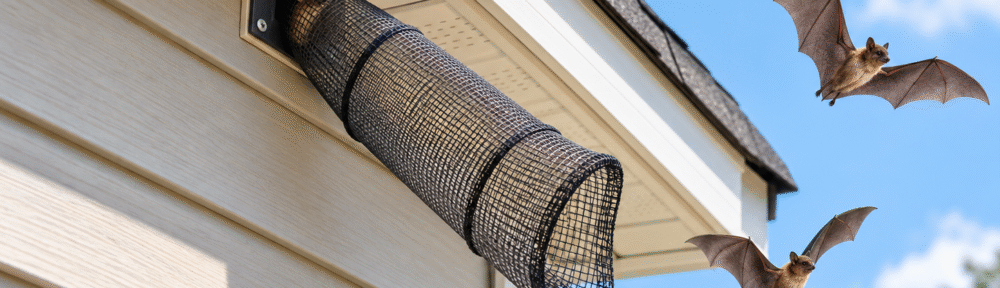
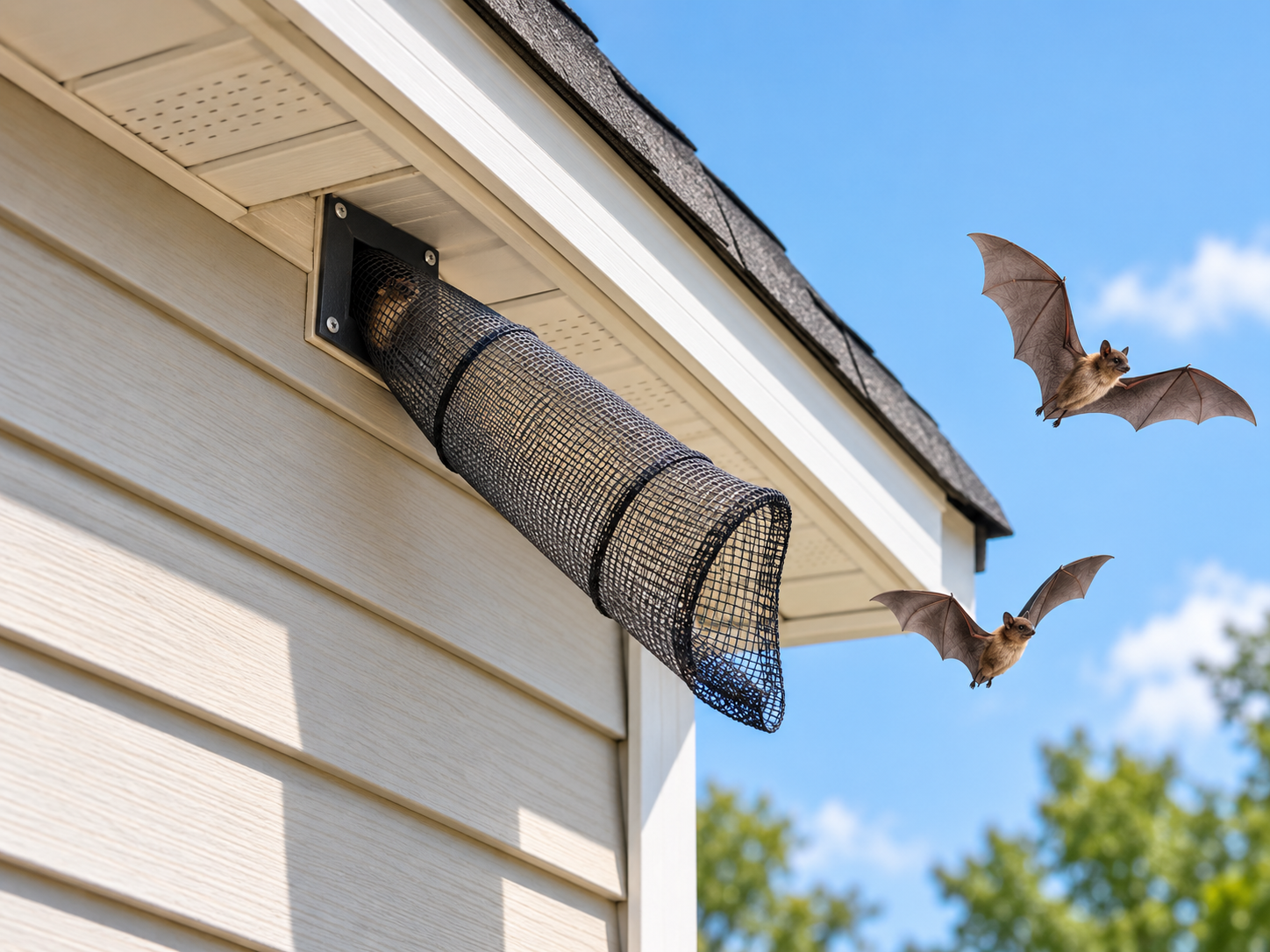
One-way exclusion devices—often called bat cones or bat valves—are installed over active entry points. They let bats exit at night to feed but prevent them from flying back in. This approach is humane and doesn’t trap bats inside your home.
Timing matters. Install these devices in late summer or early fall, after young bats can fly on their own. Installing exclusion devices during spring or early summer maternity season risks trapping flightless pups inside, which creates odor problems and, in many states, violates wildlife protection laws.
Deterrents and Repellents: What Actually Works
Several products claim to repel bats, but their effectiveness varies:
- Ultrasonic devices emit high-frequency sound meant to discourage roosting. Results are inconsistent, and bats often adapt to the noise over time.
- Bright lights and motion-activated fixtures can make a roost less appealing, though this is typically a short-term deterrent rather than a permanent fix.
- Mothballs or ammonia-soaked rags may temporarily irritate bats in confined spaces, but they don’t guarantee bats will leave for good and require careful, repeated application.
None of these methods replace proper sealing and exclusion. They work best as a supplement, not a standalone solution.
Why Professional Bat Removal Delivers Lasting Results
DIY sealing and exclusion devices can go a long way, but bats are protected in many states, including Kentucky, which means attic bat removal must follow specific legal and humane guidelines. Licensed wildlife professionals know how to:
- Identify every entry point, including ones easy to miss from the ground
- Time exclusion work correctly to avoid trapping bats or violating wildlife laws
- Recommend a prevention plan tailored to your home’s construction and layout
A professional assessment also helps confirm whether you’re dealing with a small roost or a larger colony, which changes the scope of work needed.
Maintenance Tips to Keep Bats From Returning
Prevention doesn’t end once entry points are sealed. Keep bats away long-term with these habits:
- Inspect your attic and roofline twice a year, ideally in spring and fall
- Trim tree branches so they stay at least 6 feet from your roof
- Keep gutters clean, since clogged gutters attract the insects bats feed on
Frequently Asked Questions
Do bat prevention methods harm the bats?
No. Sealing and one-way exclusion devices are designed to be humane. They keep bats from entering or re-entering your home without trapping or injuring them, provided they’re installed at the right time of year.
How long does it take to see results from prevention?
Sealing and exclusion devices typically resolve an active roost within one to two weeks, once bats have had a chance to leave through one-way doors. Ongoing maintenance keeps new colonies from forming.
What’s the best time of year to install prevention measures?
Late summer through early fall is ideal, after maternity season ends and young bats can fly. Sealing entry points during spring or early summer risks trapping flightless pups inside.
Protect Your Fairdale Home Today
Sealing gaps, installing one-way doors, and maintaining your roofline all play a part in keeping bats out for good. But because bats are a protected species and exclusion timing is critical, combining these steps with professional guidance offers the most reliable protection for your home.
Request a free, on-site estimate for Fairdale, KY bat removal and control service today.
Related Posts:
Histoplasmosis and the Hidden Dangers of Bats in Your Attic
Bat Invasion: What to Do When They Choose Your Attic
Bat Infestation Timeline: From One Bat to a Colony