How to Relocate a Bat

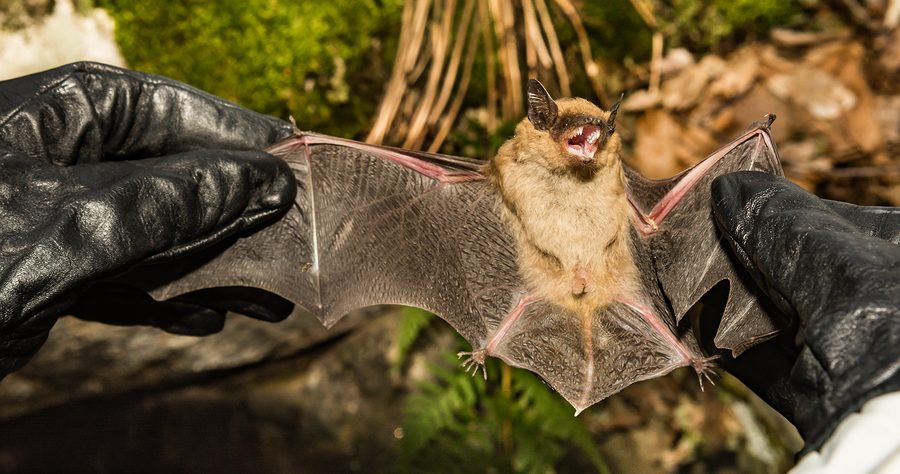
Handling a bat is never recommended. But sometimes, homeowners are left no choice but to intervene in moments of emergencies. If you have come across a bat in the house or other area of your property, and cannot wait for professional bat abatement services to arrive, it is important to understand how to safely handle and relocate a bat, for the sake of the bat’s protection, as well as your own.

Continue reading to learn what you need to know about handling a bat, including Kentucky bat tampering and trapping laws that may concern your situation.

Louisville Bat Removal and Control 502-553-7622

Bat in the House

If you have a bat in the house, you can try the escape and evade method. This involves opening all the windows and doors in the vicinity of the bat, while closing off all others, in order to encourage the bat to simply fly outside on its own. Be sure to separate everyone from the area of the bat, including pets.

Bat in the Attic

If you have a bat in the attic, try the escape and evade approach mentioned above. If you cannot access your attic well enough to open a window or door, you can also try bat abatement service. A professional bat control technician will inspect your property for the bat’s entrance, and then implement methods to make the bat leave and seal up the entry way.

Bat on the Ground

If you find a bat on the ground, whether it is a baby or injured, the best practice is to leave it alone and let nature take its course. However, if you want to relocate it, try using the shoe box method. Place an empty shoe box on top of the bat, put on a pair of heavy-duty work gloves, and then use a shovel or garden spade to gently scoop the bat up.

Next, relocate the bat to a farther-away habitat where it will not pose a threat to anyone. Furthermore, never attempt to rehabilitate an injured bat, nor keep it as a pet. Not only are there laws against this, as exotic animal domestication requires specific government permits and more, it also poses several health and safety threats to you, your family, and pets.

Mother Bats  

Sometimes mother bats carry their pups on their backs, and sometimes, there are too many clung to them. In this case, a mother bat cannot take launch and fly. If you find a mother bat with babies clinging to her, your only approach should be to contact a local wildlife removal and control company for professional intervention. They have the proper resources to ensure the safety and rehabilitation of the bat family.

Dead Bat

If you find a dead bat, whether indoors or outside on your lawn, you can use the same shoe box method given for finding bats on the ground, minus the shoe box. Since the bat is dead, it is not going to attempt to escape, so you do not need to contain it. However, be sure to wear protective gloves and relocate the bat to a faraway area where it can safely decompose.

Kentucky Bat Removal Service

Call 502-553-7622 for prompt and professional Louisville bat removal and control you can trust. We are DNR licensed wildlife control contractors who provide residential and commercial bat removal services at competitive prices. Whether you have one bat or an entire colony, we are fully equipped to manage any job regardless of size or scope. Request a free estimate or advice, anytime.

Kentucky Laws About Tampering With Wild Bats

Here in Kentucky, certain species of wild animals are protected under state law. This means that you can be penalized on several different levels if you are caught and convicted of such conduct. This is important information for those who are dealing with nuisance bat problems since it is possible to break the law without having any actual intention. Basically, what seems like an act of protecting your property may actually be against the law.

This scenario is made even more serious considering 3 of Kentucky’s native bat species are federally endangered, and thus, protected on a federal level. This means that a person can face felony charges for tampering with one of these species. If you have nuisance bat activity around your property, be sure to educate yourself on what you can and cannot do within the limits of the state and federal laws governing bats.

Continue reading to learn the Kentucky laws about bat tampering, as well as, how to get rid of bats safely and legally.

Louisville Bat Removal and Control 502-553-7622

The Laws Surrounding Wild Bats

According to KY.Gov, the official website of the Commonwealth of Kentucky, all bats in the state are protected by law. What does this mean for you? It means that it is illegal to trap, domesticate, breed, harm, or kill a bat. Furthermore, there are no intoxicants, or repellents, that are legal for bat control applications. There are exceptions to this law, for instance, in the case that it is proven that bats are damaging a property.

Possible Penalties

If an individual is caught tampering or harming bats, they can face both criminal and civil penalties. This includes jail time, hefty fines, restitution, community service, banishment, loss of professional licenses, loss of gun privileges, and more. It depends on the severity and scope of the incident.

To Get Rid of Nuisance Bats

There are several ways to manage nuisance bat activity on and around your property without harming or jeopardizing the well-being of the local bat populations. In fact, there are several ways you can be bat friendly, while also protecting your home from bat damages. Talk to a DNR licensed and insured bat control company for help dealing with bat problems. They have the knowledge and resources to remove bats safely, bat-proof your home, and more.

Louisville Bat Removal and Control

Call 502-553-7622 for prompt and professional Louisville bat removal and control you can trust. We are DNR licensed and insured wildlife rescue and control professionals with more than two decades of experience working with bats. We offer residential and commercial abatement services, including minor attic restorations for bat damages. Request a free estimate, today.

Should I Be Threatened By the Presence of Bats?

Local bat populations serve a vital ecological importance, which in turn, provides us with several economic benefits as a society. However, when bats get too close, they can inadvertently become a nuisance. If you have notices an exponential presence of bat activity around your house or business, it is important to ensure your property is safeguarded against intrusion and safety hazards.

Continue reading to learn which types of risks nuisance bats pose to you and your property, as well as, how to get rid of them in accordance to local ordinances and best practices.

Louisville Bat Removal and Control Services
Bats should only be handled by licensed professionals.

Disease

The most important reason why you do not want bats too close to your property is the risk of disease. Not only are bats known carriers of the Rabies virus, which once contracted is 100% fatal, they can also possess and transmit several other types of diseases, health complications, and outbreaks. Such risks include Histoplasmosis, which is an upper respiratory disease contracted as a result of toxic spores that grow on bat guano. See our blog, “What is Histoplasmosis?” to learn more about this disease, including who it affects the most and how to prevention tips. Additional risks include lice, mites, ticks, fleas, and other parasites.

Structural Damage

Bats in the Kentucky regions are very small. So small in fact, most can squeeze themselves through an opening as little as 3/8ths of an inch, or .037 inches. To give you an idea of how small this is, consider a dime, which is around .053 inches thick. This means that the tiniest opening in window screens, siding, roof shingles, crumbling mortar, and more, can be an open door for bats to come inside and roost. Furthermore, bats are not solitary, so where there’s one, there’s typically handfuls more. Once inside, bats soil every surface with their droppings, which can result in stains, leaks, wood rot, and all types of costly structural damages.

How to Safely Get Rid of Bats

As mentioned before, bats are important ecologically, which is why they are also protected under law. It is illegal to trap, harm, or kill bats in Kentucky. For this reason, it is necessary to hire a licensed and insured wildlife abatement company that provides non-lethal bat removal services in your town. Coming across a dead, dying, or abandoned bat is also common if you have bats around your property, so you should know how to respond if it ever happens to you. See our blogs, “What to Do If You Find a Dead Bat” and “What To Do If You Find a Bat on the Ground” to be prepared.

Louisville Bat Removal and Control You Can Trust

Call 502-553-7622 to request a free estimate for Louisville bat removal and control, today. We offer a wide range of safe and humane bat removal and control services for both residential and commercial properties within Central Kentucky, at the most competitive prices in town. That means you can get affordable bat removal and control you can trust. It was over 30 years of experience under our belts, you can feel confident in our results.

The Basic Principles of Echolocation in Bats

By now, you are well-informed that bats are not blind. In fact, they see quite well. Their echolocating abilities are more than just a visual guide; they are a biological instrument that provides an advantage in many areas of Microchiroptera bat life. Here in this blog, you will learn the fundamental facts surrounding echolocation and bats, including which bats are not equipped with natural echolocating abilities.

Louisville Bat Removal and Control 502-553-7622

What is Echolocation?

Dictionary.com defines echolocation as, “the general method of locating objects by determining the time for an echo to return and the direction from which it returns, as by radar or sonar.” But in terms of animals, like bats, they better define it as, “the sonar-like system used by (…) animals to detect and locate objects by emitting usually high-pitched sounds that reflect off the object and return to the animal’s ears or other sensory receptors.”

In plain language, echolocation is like sonar, in that you let out a sound wave, wait for the sound wave to come back to you, and then use that data to define an environmental guide for whatever application you need.

Bats are not the only animals who use echolocation; dolphins and whales are well-known echolocating species, as well as, some birds and species of shrew, and possibly even hedgehogs, are suspected of using the same type of biological gift. For these animals, the primary purposes of echolocation are coordination and direction, evading obstacles, hunting or obtaining food, and interacting socially.

How Does it Work?

Although it is not yet fully understood by the scientific community how echolocation in bats works, but we do have a basic theory. Scientists and researchers have ultimately determined that bats have built-in vocal chords that vibrate when they move air past them.

They emit these extremely high-pitched sounds from their mouths (or sometimes noses) as they fly, which in turn, travel through the air as a sound wave. These traveling sound waves have energy that bounces off anything it comes into contact with.

After emitting these extremely high-pitched sound waves, bats listen carefully for their return, and use the time data to configure their surroundings more precisely. They use this to dart and dive for flying insects, better navigate obstructions, and more.

Dealing With Nuisance Bats?

Although bats are an important part of our Eco-system, and even our economy, they can sometimes pose certain threats if their colonies get too close. If you suspect you have issues with bats, or a bat infestation in the attic or other area of your home, contact our DNR licensed and insured professionals at 553-502-7622 for safe and humane bat control service in Louisville, Kentucky and its surrounding counties. We have more than two decades of experience working with bats, and offer both residential and commercial bat removal and control services, including minor attic restorations for bat damages. Request a free estimate, today.

Do Bats Live Near My House?

Are you concerned about nuisance bats? If so, there are plenty of precautions you can take to protect your assets from animal damage, as well as your loved ones from exposure to infectious diseases and injuries. But first, assess whether or not bats are actually a threat in your area. Chances are, there are local bat populations that exist within your community; however, whether or not they will actually affect your home or property largely depends on your environmental surroundings.

Continue reading to learn how to spot bat activity in and around your property, and what you can do to protect your home and loved ones from nuisance bats.

Louisville Bat Removal and Control 502-553-7622

Environmental Factors

As mentioned, whether or not bats are indeed a possible threat depends on certain factors, namely environmental ones. You see, here in Kentucky, bats are insectivores, which means they eat a diet of insects, mostly flying sorts like gnats, flies, moths, and of course, mosquitoes. They also eat termites, beetles, and several others types of insects, but the flying bugs will easily give away a bat’s location.

Why? Well these insects typically group together in large swarms, which are very visible during dusk. And where do these bugs like to fly? Around water, like streams, creeks, ponds, lakes, and rivers. So if your home is located near a body of water such as these, you can be sure there are bats living nearby that eat up all the swarming insects each night.

To see for yourself, go outside right before the sun sets, when the light is still bright, but receding. Then look above an area of water for a swarm of insects. Be patient, and wait for any signs of bats. If you see a bird-like animal swooping down and darting through the swarm of insects, you are witnessing a bat eating its dinner! They are actually the world’s greatest built-in pest control because a single bat can consume more than 1,000 mosquitoes in just one night! You can thank them for your comfortable backyards and picnic areas.

Want to learn other ways to spot bat activity in and around your house? See our blog, “Top 5 Indications That You Have a Bat Infestation” to develop a checklist that can be investigated for clues.

Safe and Humane Bat Control in Kentucky

Call 502-553-7622 for Louisville bat removal and control you can trust. We are DNR licensed and insured bat control contractors who use safe, non-lethal methods of wildlife extraction and exclusion. We serve both residential and commercial clients, and at the most competitive prices in town. Emergency 24 hour bat removal service is also available. Request a free estimate, today.

Does Your Attic Smell Like Ammonia?

Now that spring is here, many homeowners are beginning their annual list of chores to get their home’s turned over for the upcoming warm seasons. During this time, it is commonly required to access the attic area for things like inspections, cleaning, storage, and more. If you were just up in your attic space, and noticed a foul or strong chemical-like smell, you might need to add bat removal and cleanup to your spring to-do list.

Continue reading to learn why the smell of ammonia is a common sign of a bat infestation, and what to do if you have bats in the attic in Louisville.

Bats in the Attic
Bats in the Attic? Call 502-553-7622 Now!

Bat Droppings

Bat droppings are known as guano. Guano accumulates in mass amounts in the case of a bat infestation, mostly due to the fact that bats are not solitary animals and often come in large numbers. Furthermore, a single bat can consume more than its own body weight in insects each night (up to 1,000 insects), which can lead to a load of droppings. Needless to say, bat guano is a big, unhygienic mess to have on your hands, and must be remediated with haste.

Potential Dangers of Guano

Not only is bat guano unsanitary, it is also toxic and poses several structural and safety hazards. Foremost, overtime bat guano grows fungal spores that can cause a serious respiratory disease known as Histoplasmosis. These fungal spores are caused by a fungus known as Histoplasmosis Capsulatum, which upon inhalation, causes flu-like symptoms, such as coughing and difficulty breathing.

Although not contagious, it can be easily contracted if precaution is not taken, especially among infants, elderly, and those with weakened or suppressed immune systems. See our blog, “What is Histoplasmosis?” to learn details about this illness, including causes, diagnosis, treatment, prevention, and more.

Aside from Histoplasmosis and structural damages, there are several more dangers and concerns surrounding bat droppings that you must take into consideration when dealing with nuisance bats. Read our blog, “Can Bat Guano Hurt Me?” to understand these risks more.

The Smell of Ammonia

As for smell, bat guano accumulations are commonly described as having an odor similar to ammonia, which is found in high concentrations in cat urine. A most unpleasant and strong smell, ammonia-like odors in your attic are a blatant indication of a bat infestation. If you smell ammonia, or any other foul odor in your attic, contact a DNR licensed Louisville bat removal company for information on what to do and how to get rid of them.

Louisville Bat Removal and Control You Can Trust

Call 553-502-7622 for prompt and professional 24 hour bat removal in Louisville, Kentucky and its surrounding areas. We are DNR licensed bat removal contractors that offer safe and non-lethal, 24 hour bat extraction and exclusion services for residential and commercial properties. We also provide bat cleanup and minor attic restorations for bat damages too. Request a free estimate, anytime.

Do You Need Emergency Bat Removal in Jefferson County?

Bat infestations are commonly discovered in the wee hours of the night since they are nocturnal. At night, between the hours of duck and dawn, are when bats are active and moving about in their roosts. Whether you discover one lone bat on the wall in your home, or an entire colony in the attic, you don’t have to wait until morning to contact a professional for help in Jefferson County, Louisville.

We Provide 24 Hour Bat Removal!

Emergency Bat Removal 502-553-7622

Our DNR licensed and insured wildlife abatement specialists are on duty, around the clock, and can respond to your emergency bat removal needs, regardless of time or day! Just call 502-553-7622 and tell us about your situation. We will give you step-by-step instructions, over the phone, to keep you and your family relaxed and protected until we arrive.

Why Choose Us?

Not only are we wildlife rescue and control specialists who are licensed by the Department of Natural Resources and the state of Kentucky, we also have more than two decades of hands-on experience in the bat abatement field. Furthermore, we only use safe and non-lethal methods of bat abatement, and operate our business within established industry standards and best practices, as well as, in accordance with local, state, and federal laws that govern wildlife. So you can trust that bats are protected and safely transported to a faraway habitat where they can live out the remainder of their lives in peace.

What We Can Do For You

We offer a wide range of bat removal and control services, for both residential and commercial clients, including bat extraction, exclusion, proofing, inspections, checkups, estimates, referrals, emergency service, and much more. In addition to getting rid of bats, we also provide comprehensive bat cleanup and restoration services to correct the mess and damage they tend to leave behind. We may also be able to provide bat damage insurance claim work depending on your particular policy and carrier.
Areas We Serve

To keep up with the increasing demand for bat abatement service, we maintain a large-scale service area in Louisville, and throughout Central Kentucky. The cities we service include, but are not limited to, Fairdale, Fern Creek, Graymoor/Devondale, Highview, Jeffersontown, Lydon, Mt. Washington, Newburg, Okolona, Pleasure Ridge Park, Shively, Shepherdsville, Shelbyville, St. Matthews, St. Dennis, Valley Station, and even parts of Indiana, such as Clarksville, New Albany, and Sellersburg.

How to Get Started

Louisville Bat Removal 502-553-7622
Louisville Bat Removal

Anytime you need our Louisville bat removal services, all you have to do is call our main headquarters at 502-553-7622 and let us know what’s going on. From there, we will instruct you on what to do while you wait for one of our specialists to arrive. Read our blog, “Frequently Asked Questions About Bat Removal” to better understand your role and what to expect from the entire process.

Learn All About the Tricolored Bat Formerly Known as the Eastern Pipistrelle

There are 16 known species of bats found here in Kentucky. This makes us a very lucky state since bats serve such a high ecological and economic importance! Of these 16 species of bat, 14 are categorized as permanent residents, making us even luckier, but 3 are unfortunately listed as federally-endangered. For these reasons and more, it is important to preserve and protect our local bat species as much as we can. Read our recent blog, “How to Be Bat Friendly” to learn how you can do your part to contribute to Kentucky bat preservation.

Some of the most common species of bat found in Kentucky include the Virginia big eared bat (Corynorhinus townsendii virginianus), the Indiana bat (Myotis sodalis), the gray bat (Myotis grisescens), the Seminole bat, the Mexican free-tailed bat, Northern Long-eared Bat (Myotis septentrionalis), and much more. In fact, read our recent blog, “Most Common Species of Bat Found in Kentucky” to view the complete list.

In this blog, we would like to spotlight a special bat called the Tricolored bat, which was formally known as the Eastern Pipistrelle. Why the name change? What is this bat like? Continue reading to learn some fun and interesting facts about this singular species of bat found right here in Kentucky.

Louisville Bat Removal and Control 502-553-7622
Eastern Pipistrelle (Pipistrellus subflavus)

Tricolored Bat (Perimyotis subflavus)

The Tricolored bat was initially referred to as the “Eastern Pipistrelle”, or Pipistrellus subflavus. The name was modified because it was technically an inaccurate classification since mounting evidence showed that the Eastern Pipistrelle is a much more distance relative than once thought. As result, the species was removed from the scientific genus Pipistrellus, and placed in its own genus, Perimyotis.

❦ Description

The name gives a good description of what the Tricolored bat looks like. It typically has reddish brown to yellowish brown fur, lighter under bellies, and black wing flesh. But it is their back fur that gives them their name because it has gray at the base, tan in the mid-section, and dark at the tips. On average, the Tricolored bat weighs between 4 to 10 grams, is around 3 and half inches in length, and has a wingspan of 9 and half inches.

❦ Range and Habitat

As mentioned, the Tricolored bat calls Kentucky its home, but generally only in the summer months and during migration. Other times, their range extends elsewhere. In fact, they have an impressive range, extending across the eastern United States and southeastern Canada, south into Central America, and even west into the central Great Plains. When it comes to a place to rest, Tricolored bats like to live alone or in small groups, and make their roosts in hollowed trees, abandoned mines, and caves near running bodies of water.

❦ Diet

Like most Microchiroptera bats, Tricolored bats are insectivores, which means they only eat insects. Their favorites include mosquitoes, gnats, dragonflies, moths, and anything else that flies around at night. A single bat can consume more than twice its body weight in insects in just one night. That adds up to an average of 1,000 insects per bat, per evening! That is incredible pest control for farmers, gardeners, crops, and more.

Nuisance Bat Problems

Louisville Bat Removal 502-553-7622
Louisville Bat Removal

If bats are a nuisance in or around your property, contact 502-553-7622 for safe and non-lethal bat removal and control in Louisville, Kentucky. We are DNR licensed and insured bat control contractors who use safe, non-lethal methods of extraction and exclusion. We serve both residential and commercial clients, and at the most competitive prices in town. Emergency 24 hour service is also available. Request a free estimate, today.

How to Be Bat Friendly

Bats serve a vital ecological importance all over the world. From cross-pollination and pest control, to economy stimulus, modern medicine, and more, bats have helped our society in more ways than you can imagine. Although bats can also be quite the nuisance when they infest our homes and properties, it is important to protect and preserve local bat populations. Fortunately, there are several ways you can achieve this without any threat of bats becoming a problem around your property!

Continue reading to learn how to be bat friendly by supporting the local bat colonies in your town!

Louisville Bat Removal and Control 502-553-7622

⊶ Install a Bat House

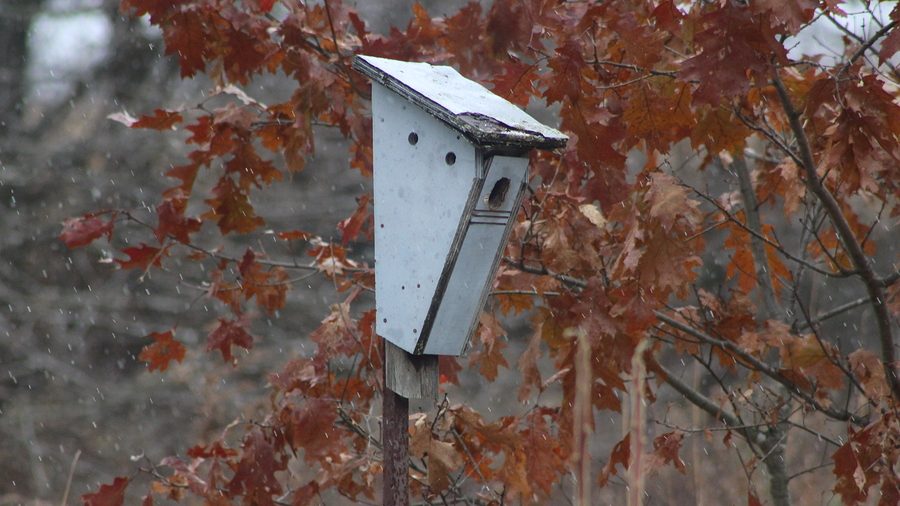
Bat houses are fun and supportive, all at the same time! See our blog, “The Benefits of Putting Up a Bat House” to learn just how wonderful having bat houses around your property can be, for both you and the local bat populations around town. There are several important rules and guidelines for installing a bat house, so be sure to learn what you need to know before getting started. Bat houses must be specifically constructed and hung. For example, you should not mount a bat house on a tree because it can put bats at risk of certain predators.

⊶ Respect Their Personal Space

Bats sometimes lose their way. They can either enter into an area they are not wanted, get lost from their mother, or even suffer an injury. As a result, it is common to come across a bat. If this ever happens, it is vital that you never attempt to move, touch, trap, harm, or kill a bat under any circumstances. Not only is it inhumane and potentially dangerous to you, it is also against the law. Some bat species that are native to Kentucky are listed as state and federally endangered. See our blog, “Most Common Species of Bat Found in Kentucky” to learn more about threatened bat species in our state. You may also benefit from our blog, “What to Do If You Find a Dead Bat” or “Here’s What to Do if You Have a Bat in the House” for guidance on similar situations.

⊶ Make Wellness Donations

If you want to show your support for both local and national bat populations, you can make wellness donations, money or time, to a bat conservation and Rabies management initiative, such as the Kentucky Wildlife Center, Cave and Karst Protection Program, Bat Conservation International, Merlin Tuttle’s Bat Conservation, the Broadbent Wildlife Sanctuary, and the Kentucky Fish & Wildlife Foundation.

Safe and Humane Bat Removal Services

Louisville Bat Removal 502-553-7622
Louisville Bat Removal and Control

Call 502-553-7622 for Louisville bat removal and control you can trust. We are DNR licensed and insured bat control contractors who use safe, non-lethal methods of extraction and exclusion. We serve both residential and commercial clients, and at the most competitive prices in town. Emergency 24 hour service is also available. Request a free estimate, today.

Most Common Species of Bat Found in Kentucky

Several species of bat are regularly found dwelling inside residential and commercial structures. The most common species include the Little Brown Bat and Big Brown Bat, but there are many more species that tend to be native to the Kentucky area. To start, you may enjoy our blog, “Interesting Facts About the Little Brown Bat” since this is among the most common species here in the state. Below, you will find a complete list of the most common bat species that live in Kentucky and its surrounding regions.

Louisville Bat Removal 502-553-7622
Big Brown Bat (Eptesicus fuscus)

Bat Species Native to Kentucky:

Big Brown Bat (Eptesicus fuscus)

Brazilian Free-Tailed Bat (Tadarida brasiliensis)

Eastern Pipistrelle (Pipistrellus subflavus)

Evening Bat (Nycticeius humeralis)

Gray Bat (Myotis grisescens)

Hoary Bat (Lasiurus cinereus)

Indiana Bat (Myotis sodalis)

Little Brown Bat (Myotis lucifugus)

Northern Long-eared Bat (Myotis septentrionalis)

Rafinesque’s Big-eared Bat (Plecotus rafinesquii)

Red Bat (Lasiurus borealis)

Silver-haired Bat (Lasionycteris noctivagans)

Small-Footed Bat (Myotis leibii)

Southeastern Bat (Myotis austroriparius)

Virginia Big-Eared Bat (Plecotus townsendii virginianus)

Bat Control Services

Here in Kentucky, bats can be a nuisance for residential and commercial property owners. Not only can bats fit through an opening as tiny as 3/8th of an inch, making it simple for them to gain access inside, they are also common carriers of several infectious diseases and parasites. These are reasons enough to ensure your home or building is protected against possible bat intrusions. Contact a licensed and insured bat removal company near you for an on-site inspection and assessment. They can give you all the necessary information and recommendations you need to be ready for bat breeding season, which is coming up very shortly!

If you see or suspect bats around your property, your best approach is to contact a professional right away for an on-site inspection. Bats can cause extensive structural damage, plus pose a long list of health and safety risks, making it a top priority to remove them as soon as they are discovered. A qualified bat removal and control company will inspect your property, inside and out, and then make the proper recommendations needed to have protection against animal intrusions and infestations.

Contact Our DNR Licensed Bat Pros TODAY!

Louisville Bat Removal 502-553-7622

Call 502-553-7622 for prompt and professional Louisville bat removal and control you can trust. We are DNR licensed wildlife control contractors who provide residential and commercial bat removal services at competitive prices. Whether you have one bat or an entire colony, we are fully equipped to manage any job regardless of size or scope. Request a free estimate, today.